



vol. 18 Supporting a creative space that connects businesses and consumers: A seminar on dietary health using traditional Japanese herbal medicine and spices will be held in Nihonbashi [Mitsui Fudosan x House Foods x Tsumura]
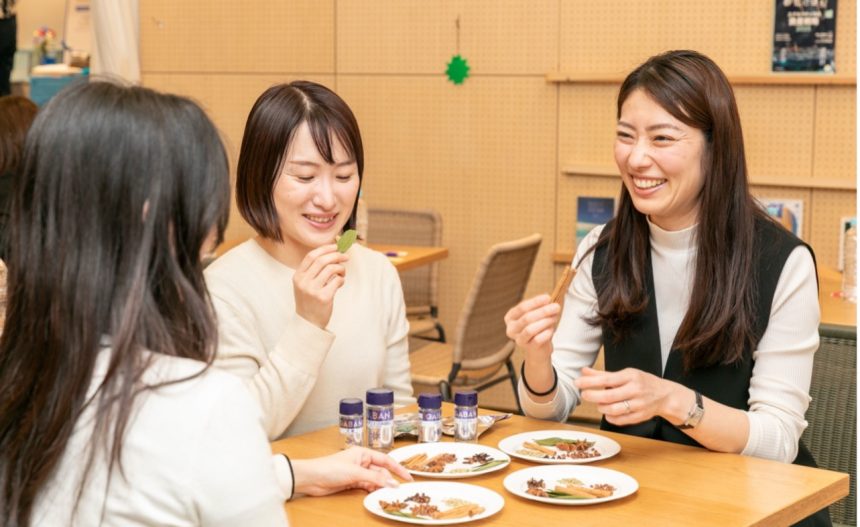
In our busy daily lives, it’s surprisingly difficult to find time to take care of our physical and mental well-being, and when we’re constantly busy with work and household chores, self-care tends to get put on the back burner… To address this, a “Dietary Therapy Seminar” focusing on traditional Japanese and Chinese medicine and spices was held on February 26th in Nihonbashi, Tokyo, for modern working women.
The event was organized by House Foods, a leading Japanese spice manufacturer, and Tsumura, a manufacturer of traditional Chinese medicine. The &mog project played a supporting role in this event, connecting companies and consumers and promoting the creation of new food value.
The venue was “+NARU NIHONBASHI,” a living lab located in Nihonbashi. This facility, developed by Mitsui Fudosan, is based on the concept of “an open space in Nihonbashi that comes alive with curiosity,” and is used as a place where residents and companies can meet and create new value through experiences.
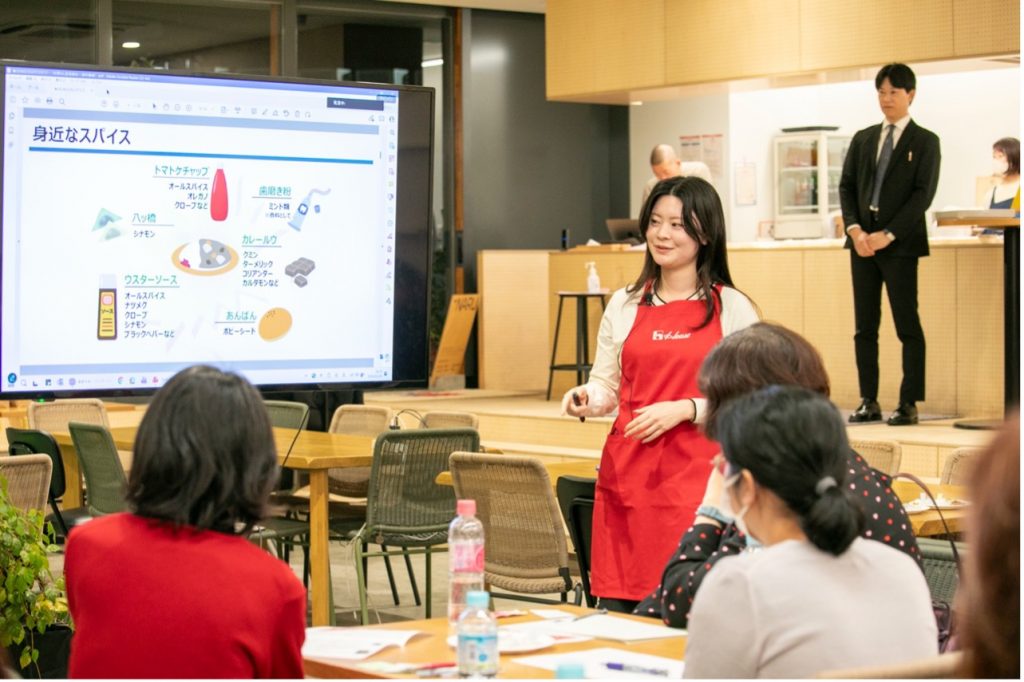
At this event, approximately 30 participants, mainly working women, gathered for an experiential seminar where they could learn about the wisdom of dietary health incorporating traditional Japanese and Chinese medicine and spices, while engaging all five senses.
Dietary therapy to address the health issues of working women
The seminar’s theme, “dietary therapy,” is the concept of balancing mind and body through daily meals. It’s gaining attention as a form of self-care that can be easily incorporated into daily life, especially for modern working women who are more susceptible to changes in their physical condition.
In the first part, the “Traditional Japanese and Chinese Medicine Lecture,” Mr. Itsuki Sakamoto, who has been involved in the pharmaceutical and food businesses at Tsumura, took the stage. While introducing the basic concepts of traditional Chinese medicine, he explained how to incorporate traditional Japanese and Chinese ingredients such as Japanese pepper, jujube, and ginseng into one’s daily diet.
Ms. Sakamoto, quoting Momoyo Taniguchi, a researcher of medicinal cuisine, explained that “it’s important not to overthink it, but to eat in a balanced, delicious, and enjoyable way.” She emphasized the importance of gradually incorporating healthy eating into daily life rather than forcing yourself to do things you can’t otherwise.
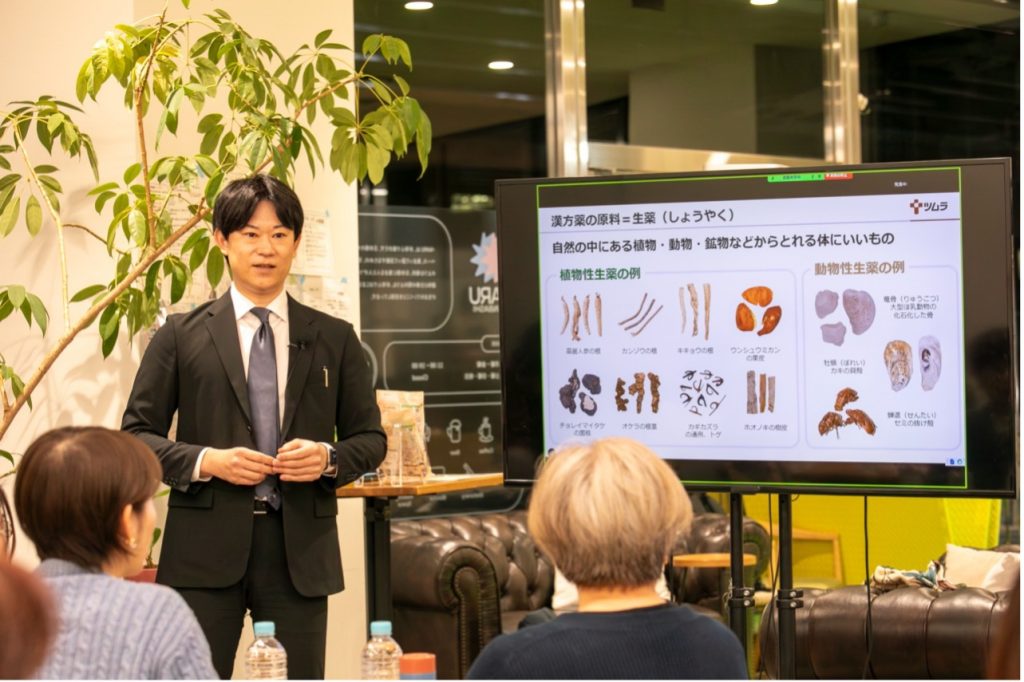
Furthermore, the following three points were introduced as key considerations for practicing dietary therapy.
① Avoid relying on just one type of food: Scientific data shows that consuming a variety of foods helps maintain bodily functions, and it can also be expected to diversify the risk of accumulating harmful substances.
② How you eat also needs to be considered: Eating only cold foods such as raw vegetables can cool the body down, so it’s important to warm yourself from the inside with warm dishes such as porridge and soup. Heating can also increase the absorption rate of nutrients in vegetables.
③ Don’t overconsume even healthy foods: Even healthy foods can cool the body if consumed in large quantities while cold, so it’s important to incorporate them gradually and consistently into your daily diet.
The Power of Spices: Lessons from Global Food Cultures
In the second part of the event, House Foods held a “Spice Lecture.” The speaker was Yumika Makino, who holds the company’s “Spice Master” certification. She explained the appeal of spices, introducing their history and how they are used in cuisines from around the world.
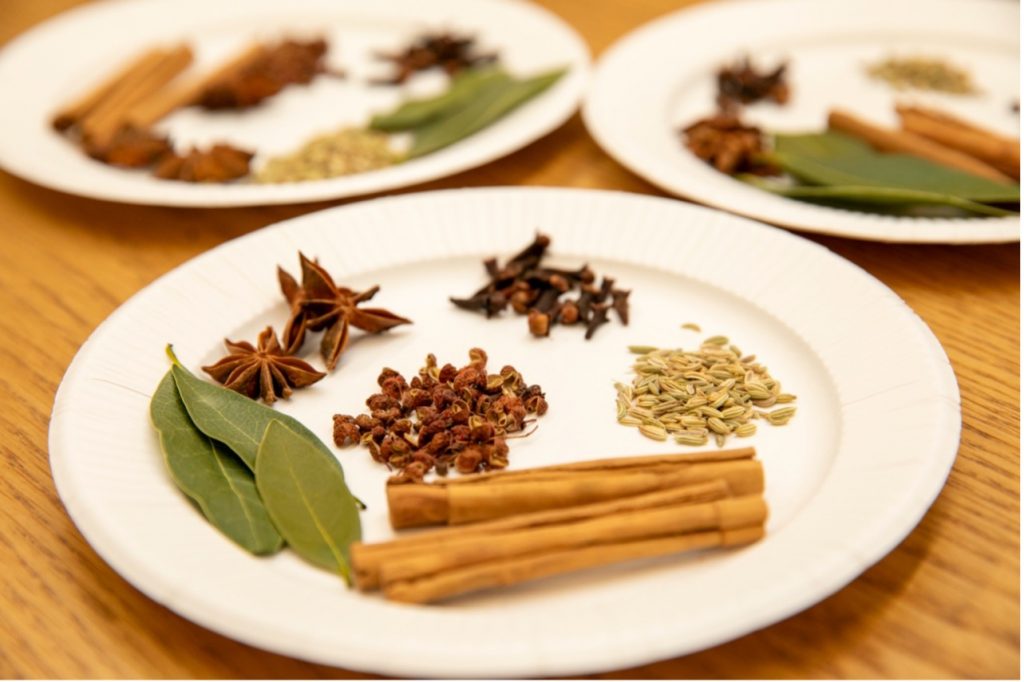
The workshop introduced six spices that are easy to incorporate into everyday meals and tea time, including Sichuan peppercorns, cinnamon, and fennel. Simple ways to use them were suggested, not only in cooking but also in drinks and desserts.
Actual spices and traditional Japanese and Chinese medicinal ingredients were also available at the venue. Participants deepened their understanding of healthy eating habits while experiencing the aromas and flavors.
This event was held as part of the promotion for “Bimi Kouwan,” an Asian soup noodle product launched by House Foods in January of this year, and a tasting session was held in the latter half of the seminar.
“Bimi Kouwan” is a product developed with the concept of “a self-care evening meal after work to support young working women of today.” The development team was centered around female employees in their 20s and 30s, and they spent about five years refining the product, repeatedly reviewing the concept while conducting interviews with young female employees within the company, who were also the target audience.
For this event, the &mog project not only provided expertise in appealing to women working around Nihonbashi, but also proposed using the Nihonbashi living lab “+NARU NIHONBASHI” as the venue, creating an opportunity to connect directly with consumers.
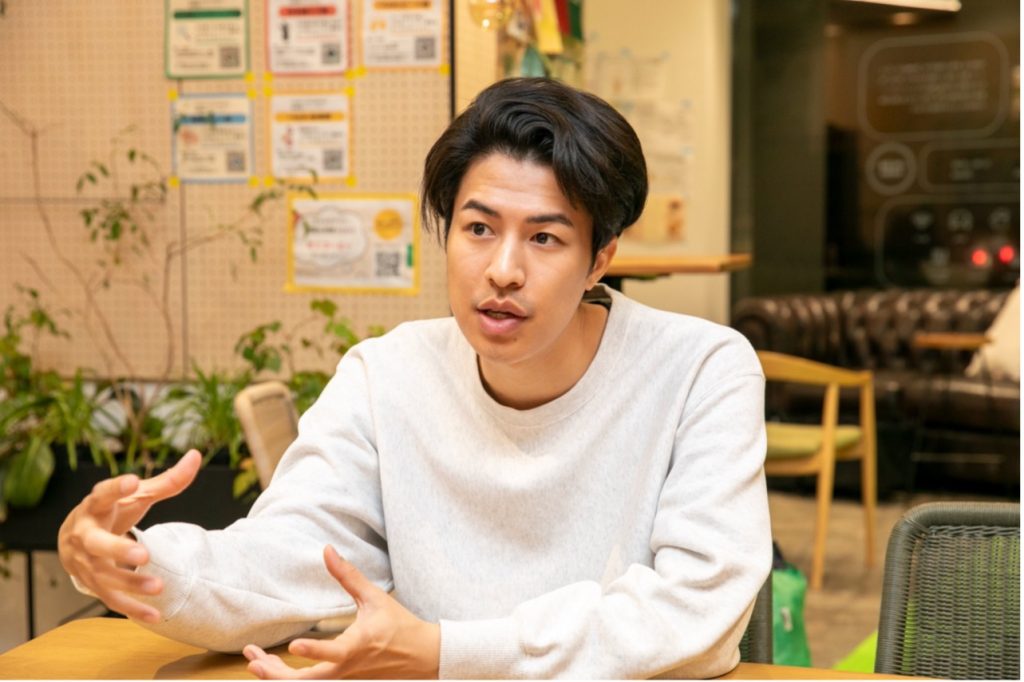
“+NARU NIHONBASHI is a gathering place for people to come together, talk, and work. We aim to connect people who gather in Nihonbashi and foster exploration activities stemming from curiosity. In addition to using it for events like this one, we are also developing mechanisms to make the expansion of activities visible by allowing users to use it as a base for hobbies and work activities,” says Nobutaka Yoshida of Mitsui Fudosan, who is promoting the &mog project.
Going forward, we plan to analyze the results of the seminar participants’ surveys in collaboration with House Foods and use the findings to support product branding.
